
Alan Gropman was attracted early on to the ethos and mission of what became the Carter School in part because he was a veteran of Vietnam. Many veterans understand better than most what the costs of destructive conflict, war, and violence entailed. Some came to us as students well into their adulthood, with more experience of the world than some of the faculty who instructed them. Others supported our work through service on advisory boards, mentoring students and, not the least, philanthropy.
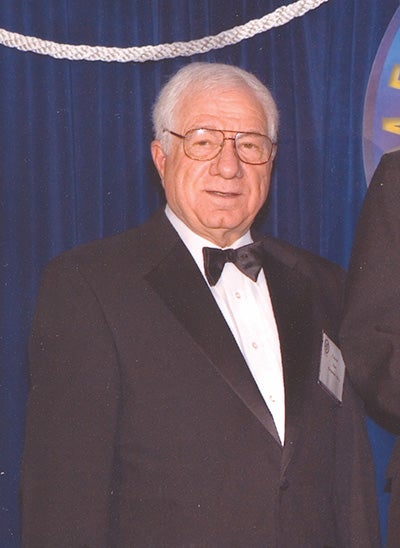
Alan was not merely typical of such a person, but the very exemplar of one. He served 27 years in the U.S. Air Force, many of them as a C-130 navigator, flying over 600 missions in Vietnam, and retiring as a colonel. Among his other decorations was a Distinguished Flying Cross. Along the way, Alan received a PhD from Tufts University, and entered a post-service career in the academy. He taught at the Air Force’s own Academy, and at the National Defense University. His specialties were logistics, national security and strategy and, perhaps a little more surprising, history. He wrote the history of the Air Force’s racial integration, which saw three revised editions between 1977 and 2002 – an indication (not surprising) that integration did not happen as one, smooth, historic event. So, Alan was a historian and a scholar, and one object of his scholarship, race and social integration, pointed to something central to his values and commitments.
This, I suspect, is what drew him to the Carter School very early in our own history, and over the years he remained with us. He advised a number of past directors and eventually, when the Institute became a School, its deans. From 2013-2019, I was among them. Serving as chair of our advisory board, Alan was a valued sounding board and counsel. Occasionally a gentle critic. As dean I also came to appreciate his mentorship of our students, particularly those interested in the intersection of public policy and conflict resolution. His annual course on Washington’s think tanks introduced many students to the arcana of that world, and “field trips” were one of its highlights.
Finally, Alan supported the School though his generosity and philanthropy, some of it gifted directly to students in need, much of it given as close to “anonymous” as semantically possible. Among other projects he supported, he singlehandedly financed the research, writing, and publication of our School’s “official” history.
Alan lived a full and consequential life, and we will miss him.
Kevin Avruch
June 10, 2026
Carter School News
- September 23, 2026
- September 23, 2026
- September 10, 2026
- September 2, 2026
- August 11, 2026