

National intelligence is perhaps the very last thing you would talk about during dinner. But despite being a boring subject, it is a critical thing that impacts every single citizen’s safety and security. To put Season 1 to a close, David Ramadan and guest co-host Larry Pfeiffer sit down with General Michael Hayden, former director of the National Security Agency and the Central Intelligence Agency, and Mark Zaid, one of the country's leading national security attorneys. Together, they take a deep dive into the current state of national intelligence: are we still safe, or should we be on red alert? They also discuss the potential dangers of politicizing government intelligence agencies, as well as how democratic societies can protect themselves without losing themselves.
Watch the episode here
Listen to the podcast here
We are discussing intelligence, accountability, national security, and public trust, issues that sit at the heart of our democracy and our security. We are fortunate to have with us General Michael Hayden, a retired four-star Air Force general who served as director of both the National Security Agency and the Central Intelligence Agency, and who founded the Michael Hayden Center for Intelligence, Policy, and International Security here at George Mason University.
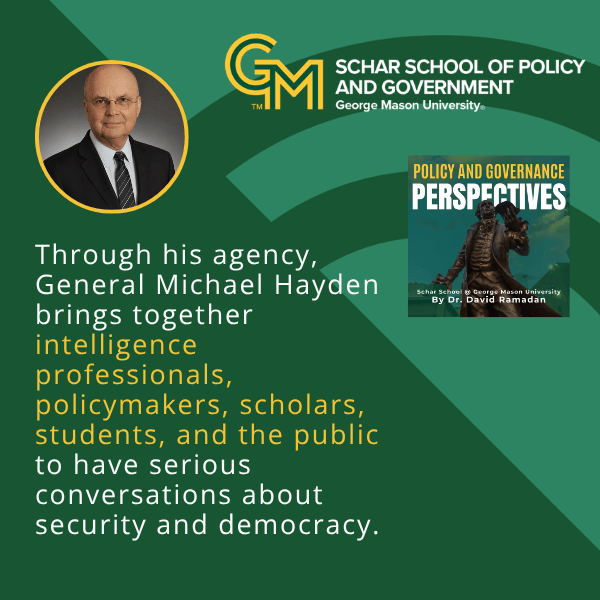
The center brings together intelligence professionals, policymakers, scholars, students, and the public to have serious conversations about security and democracy. Also joining us is Mark Zaid, one of the country's leading national security attorneys. Mark's work focuses on national security law, government accountability, whistleblowers, security clearances, and Freedom of Information Act litigation. He founded the James Madison Program and co-founded Whistleblower Aid.
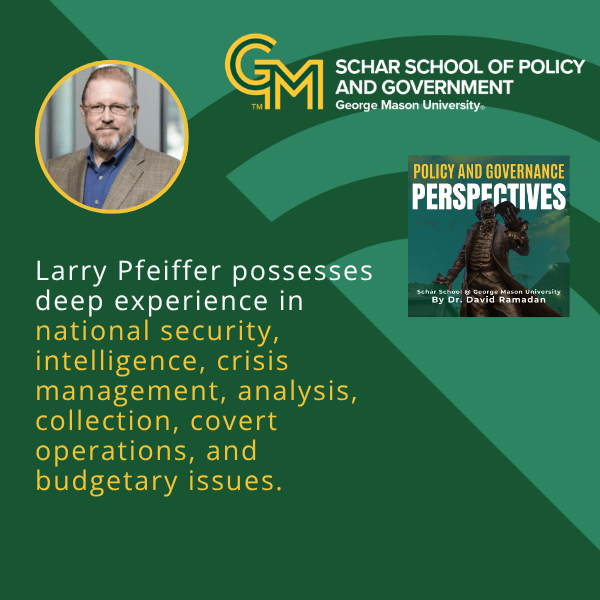
Co-hosting with me is my Schar School colleague Larry Pfeiffer, director of the Hayden Center. Larry brings deep experience in national security, intelligence, crisis management, analysis, collection, covert operations, and budgetary issues and has helped make the Hayden Center one of Mason's signature platforms for informed public dialogue on intelligence and security. We will start with the Hayden Center, what it does, why it matters, and then move into bigger questions, secrecy and transparency, whistleblowers, politicization of intelligence, cyber threats, and how democratic societies can protect themselves without losing themselves. General, Mark, and Larry, welcome to the show.
Thank you.
Thanks.
How The Michael Hayden Center Was Founded
General, let's start with you and the first segment of this. We will talk about the Hayden Center, why it exists, and why it matters. Please tell us, this center that bears your name, why you want to create it, and why at George Mason?
Yes, indeed. First of all, I have aphasia. It is a little bit hard for me to say many things. It is almost 1, 2, 3, 4, 5, 6, 7, 8 years, but little by little I can do it. I'm glad I'm there. Thank you.
We're glad you're here as well, and god bless, General.
Thank you. Actually, we talk about intelligence a lot, and you can say many things really about intelligence. I was at CNN for three and a half years, maybe 3 or 4 times a week. Once in a while I would say, "No, I'm sorry, I cannot say I cannot talk about that." Most of the time, I can say it, you see? It's really good at GMU to talk about intelligence. That will be very important for GMU, but also for the American people.
Talking about intelligence, is that the gap that you were trying to fill, or was there another gap in addition to that with starting the Hayden Center?
No, it was part of what I want to say is we can talk about intelligence, and a lot of times, "No." I like a movie, but that's not right, it is not really good at all. Let's talk about intelligence and people, well, for example, I live about five miles from the CIA. A lot of people in this neck of the woods. When I go to the McLean Family Restaurant for breakfast or lunch, I'm saying, "I know him," and so on. They're all part of the CIA. Let's talk about that as well. It's important to talk about that because a lot is going on, and I'm afraid I'm glad we have done it now at GMU. Let's talk about a lot of things. By the way, as I said, most of the time it will be okay. It's very important.
Important work indeed. For some of our audiences that are not familiar with the McLean Family Restaurant, I do not live in McLean, but every time I have been there and been there numerous, numerous times with friends, you're almost always going to find either somebody of the stature of the General or a member of Congress or somebody you've seen on TV. It's the McLean crowd's hangout, the who's who of that area. Thank you, General. Larry, let me ask you something. As director of the center, how do you describe the mission to students or visitors who may not come from national security backgrounds?
To feed off of what the General said, we see our job as demystifying the intelligence community and the intelligence business for our students, for the general public. We see our mission as plumbing a little deeper than you might find on a cable news network television show or than you might see in as the General said in a movie or TV series. Have serious conversations around serious topics.
We're more than happy to talk about the imperfections of the intelligence community and how, in a democracy, intelligence can be held accountable for possible abuses or overstepping bounds. We just see our job as helping to fill that void of knowledge that most Americans have about the US intelligence business. Too often, because of the classification levels, as the General discussed, too often, people are unable to talk about what the intelligence community can do.
It leaves the battlefield in essence open to those who wish to do the intelligence community harm or our country harm, or those who perhaps hold a grudge against the intelligence community for some past or perceived abuse that they felt that they suffered. You end up you can end up with a very skewed vision of what the intelligence business is actually about. That can be dangerous for our country if our Congress or other players act against the intelligence community based on bad information. We're trying to fill that gap.
Thank you. Tell us a little bit about the programs that you run at the center.
We've been doing this since the fall of 2017, and we are focused on putting on speaking events. We do them in the evenings, usually on a Tuesday, Wednesday, or Thursday evening at 7:00. We will feature panel discussions or occasional one-on-one interviews with either current or former government officials, academics, think tank experts, or journalists. We have plumbed into topics as serious as recently we did a great event on the Havana Syndrome anomalous health incidents, which are attacks on diplomats and intelligence officers around the globe by some adversary, possibly Russia.
We've done topics as light as interviewing former intel officers who now write spy novels for a living in their retirement. We've had a lot of fun, but we also can dig into some serious topics at times. We are averaging at the moment about 6 to 8 events, and we do those mostly within the academic calendar year, so from September through May. We may do the occasional summer event if we feel a little inspired. If folks are interested in seeing the kinds of events we've done, we have a Hayden Center channel on YouTube.
They can see every event we have done, going back to 2017. They're free, they're available to the public. I've received messages from school teachers, from civic associations around the country who ask permission to use our material, and I say, "You do not have to ask permission, that's why we put it out there." I encourage folks to go check that out. We have a Hayden Center website as well that has those events and talks, a little bit more about our mission.
The Role Of A Public University In Intelligence And National Security
In general, a public university and the George Mason Schar School in particular, why is it important for them to play a role in intelligence and national security education? Are we talking, of course?
Is that for me?
Yes.
George Mason University is ideally located. We're in the Washington metropolitan area. George Mason University and the Schar School, in particular, value the expertise of practitioners and former practitioners. If you come to George Mason University Schar School, you're going to get an education not just from fantastic academics and researchers, but you're also going to be getting classes from people who actually did the job, people like General Hayden.
We've had Andrew McCabe, former FBI acting director, on our staff. Michael Morell's been on our staff. It is hard to underestimate the value of hearing from people who have actually done these really difficult jobs. Our geographic proximity, the stable of academics and previous practitioners on our staff, really can be valuable to anybody who might be interested in either coming to the school or just learning from what a center like the Schar School and the Hayden Center has to offer.
Thank you. Mark, onto you. From the outside legal and accountability world, how do you see institutions like the Hayden Center at the Schar School?
They are essential, and it is fantastic the role that these types of entities play, especially the Hayden Center. I am the true outsider. As much as I've worked on intelligence issues for over three decades, my entire professional legal career, I have never been inside the federal government. I never worked inside the CIA or elsewhere within the US government. I've always been out there to hold them accountable. In fact, if you had probably asked the General or Larry what they thought of me when they were back in office, they'd have a different opinion.
They may still have that opinion of you, Mark.
They might. It's exactly why it is so important. Justice Brandeis said over a century ago, "Sunlight is the best disinfectant." It's all about transparency. Oftentimes, you need to get that from former officials within the community. The last, I'd say, I trace it back because I represent a lot of people who write the books, the novels, but the non-fiction books, and help them get them cleared. Since the late '60s, there's been a shift in those who come out of the intelligence agencies, generally a more able willingness to tell their story.
That's a good thing. To be able to interact with people like General Hayden, like Larry, who served as chief of staff, is phenomenal to have that access to be able to go to these public events, to be able to raise your hand or watch online and type in a question is such a great opportunity. For the students who go, “Even better to be.” I went to school in upstate New York, in a pre-Internet era. We did not have the opportunity to have this type of interaction with people who led the government and made worldwide decisions on a daily basis. It's a phenomenal opportunity.
Would you also say that besides the opportunity of interacting and learning in general, it helps demystify the intelligence and what the public thinks of the CIA and other agencies?
There's no doubt, particularly because it humanizes it. For the most part, I knew who General Hayden was during the time that I was engaged with cases at the CIA and the NSA, but I never interacted with officials at that level, especially when I was younger. Even now, as a more seasoned lawyer, I'm not typically personally interacting. I'm not in those social circles or business circles.
To be able to meet, see, and listen to individuals who spent their time in that community and realize, "We have the same interests about this. We go fishing. I love antique books. We go to Nationals games," whatever it might be. That really does make all the difference in the world. I tell you, when I litigated against the CIA pre-General Hayden's time, there was one lawyer who was the chief of litigation, whom I literally despised. If I had to describe who my hated adversary was, it was this guy, and he felt the same way.
A mutual colleague in the government said, "I know both of you. You guys would like each other. You need to talk." It wasn't until he retired and we've talked about this publicly together on panels, when he retired and we got together and we realized, "We do like each other, and we have the same interests," and we talk and work together now all the time. If I had had that during the time, even though we represent separate entities, that lesson, which I think the center helps convey, to be able to get to know someone humanistically, personally, is so invaluable.
You just reminded me of a recent not incident, but something that happened. A leading national Jewish figure in the United States called me and asked me about a Palestinian American individual. He was like, "I cannot believe he said that. What do you know about him?" I said, "Look, if I put you both together in a restaurant and do not know where you stand on this issue and where he stands on that issue, you two will share a beer and enjoy it and probably talk about the kids and soccer and everything else, because knowing both of you, you have both that great personality.
What Do Intelligence Agencies Owe The American People
The issue on hand here is where you disagree, not the individual." You're absolutely right on that. Gentlemen, let's move on to intelligence and democracy, talk about secrecy, about trust, about accountability. Generally, I'll go to you first. You led both the NSA and the CIA during some of the most consequential national security moments of the last quarter-century. In plain English, what do intelligence agencies owe the American people, and what can they never fully disclose?
That's a great question. Believe it or not, what I'm going to say is that you can say almost anything. Now there is some that you cannot say, like, for example, I know some covert actions. I cannot say that ever again. Most of the time, I can say it. For example, when I was writing my book, I wanted to say this. "Can I say that or not?" The CIA would say, "Maybe, maybe not." Most of the time, I was able to say it. That's very important. When I was done with the CIA and NSA, there was a real problem for Snowden.
People wanted to talk with me on TV a lot, and I was able to actually I was able to do it before the CIA and the NSA. They cannot do anything, but I can, and I did a lot. I actually said, “What's going on right now is actually legal. It is legal.” Now, would I do that? Maybe not. I would say, "Maybe I would do that, but I would not do this," but it was legal. Let's talk about this. It's just people mad. No, let's talk about this because maybe I would say, "I would do this." A couple of times, I would say, "It's legal, but let's not do that."
You did that in your individual capacity after you left. Do the agencies owe us as citizens information?
Absolutely. I went on TV when I was CIA director. Now, I did not do it a lot, but I did it because it's very important for the CIA that the director talks about many things. What's when I was able to do it. By the way, I talked to the President and said, "Mr. President, I want to do this. Do you think it's okay?" The President said, "Let's try it." I was on Sunday morning. I did it two or three times. That's very important. I was a servant of the people, and I wanted to say something about it. If I did not do that, that would be, first of all, wrong for the CIA, but is also be wrong for our democracy.
Thank you, General. If I can just jump in here. The General has commented in the past that there are two things that are inherent in our American democracy going back to our earliest days, and it's a distrust and a wariness of extreme secrecy and extreme power.
That's very important. As you, Larry, that's exactly correct. By the way, I'm glad of that.
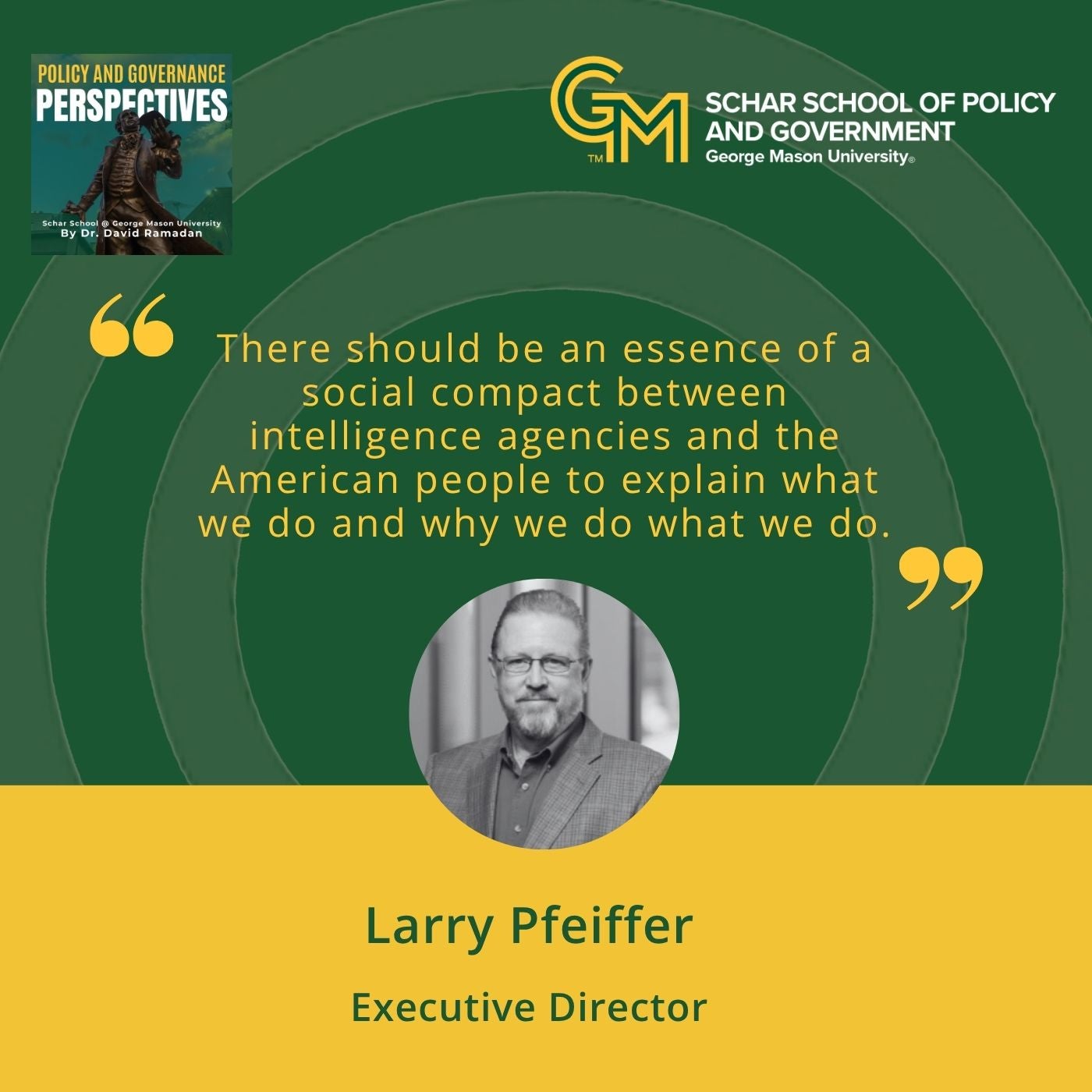
Because of that, it's incredibly important as an essence of a social compact between these intelligence agencies and the American people that there be venues and avenues for explaining what we do and why we do what we do, how you know, what is or is not legal, what is or is not moral or ethical. In the 1970s, the way this nation decided we would handle that was through oversight committees of Congress. The House Intel Committee and the Senate Intel Committee, with select members who would hear the gory details about what we were doing, and the notion was that they could then represent to the American people that this was okay, or we stopped this because it wasn't okay.
With the advent of 24-hour news cycles, instant communications, and social media, there are many of us who question whether congressional oversight committees are enough to help guarantee the establishment and maintenance of trust with the American people about what we are or are not doing. General Hayden's view, going back decades now, was that no, perhaps that wasn't enough, and perhaps key players at these different agencies need to be getting out and talking about what they can talk about.
In some cases, that means disclosing more of our history, talking about our past successes, talking about our past failures, and how we corrected them, because maybe you cannot talk about what you're doing because you do not want to expose sources, methods, or put humans at risk. It's a tricky business to try to do that in a way that does not expose those secrets. In a democratic society, I think we believe that that's an important role that we, as former employees, and we as the Hayden Center can take on.
When Is Government Secrecy Necessary – And When Is It Harmful?
It is refreshing to hear that from both of us. Mark, if you do not mind, let me ask you. Your work often sits at the point where secrecy, law, whistleblowing, and constitutional rights collide. Where do you think government secrecy is necessary? I know you would prefer not to have any of it, probably from the outside. Where do you see it’s necessary, and then where does it become harmful?
I've had a unique role as a lawyer for spies, some of the deepest undercover operatives at the CIA and elsewhere within the US government. I actually would say I agree that there needs to be a certain level of secrecy. Anyone who has had authorized access to classified information, of which I've had a security clearance at the TS/SCI level for many years over the course of years, knows two things. One, there's absolutely information that needs to remain secret, especially involving human sources, because lives could be at risk, my clients' lives could be at risk, more likely their sources and assets, technology, and things may be at risk.
There is unbelievable over classification. There, as we often point to in many of our Freedom of Information Act litigation and during efforts to declassify information, I can point to countless public statements of senior government officials who, while they're still government officials, are saying, "At least 50% or more of information is overclassified." That's something we need to deal with, and we've not dealt with it very well. There does need to be a balance. Now, I co-founded Whistleblower Aid, which provides pro bono for free legal representation to whistleblowers in the aftermath of Snowden to make sure there would not be another Snowden.
What he did was unbelievably damaging, completely illegal, and entirely unnecessary in the breadth that he did. I wanted to be able to make sure there's a pathway for lawful whistleblowing within the intelligence community, whether it's to bring it to as Larry said, the oversight committees, which we can have a major debate about as to how effective that is, or to bring it to the inspectors general, which were created at the same time in the aftermath of Watergate, which we can have a great debate of whether that's effective or not.
Especially now, during this second Trump administration. Even before that, we could talk about it. There's a lot of work that needs to still be done to strengthen the system, but there can be an incredibly powerful, strong, and fair balance to protect national security, while also conducting proper oversight of the US government in general and the intelligence community specifically.
What I'm hearing is you're differentiating between a genuine whistleblower for good versus a leaker who is leaking for damage.
For those of us in DC, when we say leaker, we are generally talking about someone who has illegally disclosed classified information. Obviously, the term generically is used all around the country, and it does not have to refer to classified information, but for those of us inside the Beltway, that's generally what we're talking about. I have taught lawyers about whistleblower laws, and I will openly say Ed Snowden, Chelsea Manning, these individuals, and I represented Chelsea for the classification review of her book, the recent book, not at the time when she disclosed to WikiLeaks.
They are not lawful whistleblowers. People generically may see them as whistleblowers, I get that, but they do not meet the legal definition that they are entitled to any lawful protections because they went outside the norms, outside the rules, and unlawfully disclosed classified information unnecessarily, is what I would say. Which is why I would have represented both of them had they come to me.
We would have done it the right way, as I did with the intelligence community whistleblower in the first Trump impeachment, who we made sure that that information was transmitted properly, lawfully, from within the intelligence community to the congressional oversight committees. That's a separate topic, but now what we can talk about is what's going on, but that's the proper way to do these things, and it can be done right.
Mark, with all the reforms that you helped champion and with the different legislation and executive orders that now govern effective whistleblowing, how would you grade the government on how they abide by those rules, regulations, and laws? If the grade's anything less than an A minus, are there additional reforms that you think are necessary to make it more effective and to protect both legitimate whistleblowers and encourage those who might want to leak to pursue the more lawful avenues?
The second Trump administration is, in fact, very different from the first Trump administration. What it has shown is how weak our democracy actually is because of how much we rely on norms in order to implement the laws. The norms were very much the strength that held everything together as we pursued the different implementations of the laws. I would give us, I do not know if I would necessarily say an F because there are still very good people inside the government, people I trust, people I know who would want and try to do the good thing.
It's not much higher than an F. I mean, there are inspectors general's offices that I just do not trust anymore. I cannot bring a whistleblower to them. There are members of Congress, as there always have been, whom I cannot trust. There are committees that perhaps I do not trust as much, and I have to go about doing things a different way. The judicial system has maintained its integrity and its non-partisanship far more than the other two branches of government. The path for whistleblowers to go to the judiciary is limited. We create it every so often.
There are ways I can do FOIA lawsuits, I can do prepublication review First Amendment actions, but it is very complicated to be able to balance or navigate that line to make sure that the clients, the whistleblowers, do not get in trouble, or us the lawyers, because as is known, I've been targeted as the lawyer for whistleblowers. We're going to have to really revisit the system post-Trump/MAGA power to see what we can do to restore the independence of some of the entities and the institutions to be free from undue influence. We're going to have a very monumental task ahead of us for it, unfortunately.
I think about that a lot, and it will take time, maybe 10 or 15 years, I'm afraid.
It's complicated without getting into great depth because that would be a whole show itself. The notion of the unitary executive theory, which is basically the president is a king, that the president is not subject to oversight by either other branch of government, was Pandora's box. It was the demon in Pandora's box that never really was alive in the country's history. Because they've opened that box, that demon can never be put back in. We can restore the norms because of the individuals who will be in power again, but another individual can emerge 15 or 20 years from now and just revive the demon again. We can go tumbling down the same path that we've been in for the last what feels like a century, but it's only been not even a year and a half.
Stellar Wind: What Happened After 9/11
I want to say something because I think it is important for this episode. I was the CIA NSA director after 9/11. They called me, and they talked to the President. I did some things after 9/11 that I'm very proud of. I really am. Now they know what's happening 4 or 5 years later. Some of them said, "That's bad." Other times it was good. I'm glad I did it. I would not do it now. Do you understand? Under the current circumstances, under the current administration, that's not right. We will not do it. It may be legal, but I will not do it, period.
Give us an example, General. What are you talking about?
Larry, talk about Stellar Wind.
Post-9/11, one of the gaps that was identified by the intelligence community and by a review of the intelligence community were laws and regulations that limited our ability to share information across law enforcement and intelligence lines, but also there were limitations on how an organization like NSA, which collects signals and communications, it prevented NSA from collecting communications that traverse the United States without obfuscating identities of individuals who might have been communicating.
When General Hayden was asked what capabilities he needed in order to be more successful and effective against to be more aggressive. One of the things he identified was the ability to target more deeply US communications, looking for foreign terrorist connections. Not targeting US communications to look and target US people, but to target foreigners who were wanting to do harm to the United States who were communicating inside the United States with potential other terrorists or potential Americans who might have been supporting them.
Under the existing law, there was nothing that was going to allow that to take place. The President, using his Article II authorities to protect the United States, his commander-in-chief authorities, authorized General Hayden to use NSA's tools and techniques to target those communications. The committee's senior leadership of the intel committees was briefed about this at the time, but no staff members and no broad membership of the committees were informed. That activity was eventually exposed. Was that Snowden who exposed that?
No.
It was even before Snowden, right?
Yes, I was almost the CIA director now.
It's years later, it gets exposed by the press as to what the NSA was doing. It gets broadly mischaracterized that we were targeting US people, and it becomes a bit of a controversy. There were questions raised as to whether Article II was sufficient. Was that a sufficient ground for justification for this activity? Congress got involved. Now, we do not go into all the details, but lots of Congress people who were briefed on this said they never were briefed on it, and they were horrified that this actually happened.
That was their public face at the time. Ultimately, and ironically, laws that were passed under the FISA Act, the Foreign Intelligence Surveillance Act, something referred to as Section 702 today, actually ultimately authorized the NSA to do what they were doing under the Article II authorities, and actually more. Actually, more than we were doing under the Article II authorities by themselves.
Suppose under the supervision of the FISA court, right?
Yes.
That's correct. What I want to say is I did this. I'm glad I did it. I'm glad they talk about it. By the way, people who did not like it, that's American democracy. It's okay. I did it, but I would not do it now.
Why?
I'm afraid of this government.
They are doing it now, General, right?
The concern is that they would be doing even more than they potentially would be abusing this authority to actually target US people for political purposes and not for legitimate counterterrorism or counterproliferation or other reasons. At that time, a lot of people will look at us and say, "General, why didn’t you say at the time that we need to put this in front of Congress and have a vote, et cetera, et cetera?" You have to put yourself in the 9/12 mindset.
On September 12th, if the American people thought that we were going to sit and have long-winded civic debate in the halls of Congress about this authority and have it take months and months for something to be passed, and run the risk of having another 9/11 attack happen in the country, they would have crucified everybody in the administration. The decisions were made to use the president's Article II authorities. I would ask the General because I was not with him at that time, but was there the notion that at some point in the future this would be adjudicated with Congress?
Yes, indeed. By the way, it was only for two months, and then they had to do it again.
Renewals, that's right. They had to be renewed. Yes, there was a time limit on this authority being granted. 60-day authorities, yes.
Understanding The Unitary Executive Theory
Let me follow up on that, and even back or back up for a second here. Mark, you talked about this unilateral executive, I think you called it the Unitary executive theory. Unitary executive theory, and that we may go back to the norm, you called it, beyond the Trump MAGA era. Two thoughts came to mind here. Norms are not laws. I do not know if we'll go back to norms or not, as long as people are willing to get away with it, or people can get away with what they can get away with. Take us back for a second. How much of that is unitary executive theory that just came out of the White House, or how much of that is related to the Supreme Court decision that pretty much exonerates the president of anything he does?
That Supreme Court decision, without a doubt, is emboldening Donald Trump and probably those around him, even though we do not know the scope of its application. Would it apply to an Attorney General, for example? Right now it it only applies to the president, effectively saying that anything official in nature, you will have immunity for any president. It does not matter who. That's dangerous in my view. Hopefully, the Supreme Court will revisit it at some point in time.
What would be a norm, like a norm would be that, as far as an example, the independence of the Justice Department from the White House, not receiving direction from the White House, not receiving a late-night tweet, or what would have been a private message to the Attorney General as to why you aren't going after my perceived or actual political enemies. To hear General Hayden say he's scared of this administration and would do things differently, people should wake up and listen to that.
To hear a former NSA, CIA director, and deputy director of the DNI say they are scared of this current administration is unbelievable and eye-opening. I'm not surprised by it, of course. I know the General's opinion about this. I share it. To have an administration where loyalty and I do not know if it's I'm trying to think of how the word would be pronounced, but sycophants, I don't know. I cannot say that word. I'm not sure what it would be. I might be making it up.
To have people in these positions who act as if their loyalty is to not the Constitution, but the president, the individual, is a very scary thought and was contrary to what the founding fathers wanted in our country in setting up three branches of government that are supposed to be in a circle with arrows going around and going in between that they can all oversee each other and keep them in check. The unitary executive theory does away with that complete model, so that you would have to do so to some extent. Thankfully, there's a level of incompetence in this administration that has not seen it manifested into how bad it could get, but we'll see, we're early on.
It’s sad that we're talking about incompetence here, which is saving the damage that could have been done.
Even just with the revocation of my own security and Larry's security clearances.
Do you still have them, or did you all lose yours?
I have mine back because we sued and were able to prevail. The notion that an agency receives direction from the president or from the White House to an agency to take an action and that that's the final rule is where we are now, and the danger that can arise from that, especially in a democracy where they call themselves the greatest transparency administration, and they're anything but. They're transparent, I guess, in that they use Signal openly to have classified conversations in an unclassified, insecure format. That's not the transparency that we actually want from US government officials.
Can we go back to the norms without a reversal of that Supreme Court decision? Regardless of who the president is, we should get the number one world next president comes in and hand that power in his or her hand and saying, “I can do whatever I want to do.”
I’ll give you another concrete example of what we’re all talking about here, and is on going right now. What would be an example?
The use of the Espionage Act, which is a poorly named statute that goes back a hundred years, because we all want to stop espionage in what we think and understand espionage to be, but the Espionage Act also protects unauthorized disclosures, or can be used against Snowden, against Manning, against anyone who leaks classified information to the media. Even if their motives are totally sound, even if the information was something the public should know. Let's take the worst situation that we absolutely want to know.
Journalists were typically, I'll use the word immune, not legally immune, immune by norm. The US government would not go after a journalist, a recipient of what's called national defense information, classified information under the statute. They would go after only the leaker. They would even stay away from subpoenaing journalists' phone records or surveilling them. Every once in a while, an administration, including Democrats, would step over that line and change that norm and do something.
When they got caught, or it was exposed, the norm would shift back, and the policy would change so that the Obama administration, the Biden administration said, “We're staying away from journalists.” In the Trump administration, that line has been passed. Now, in fact, as we're taping this, The Wall Street Journal and other media entities have received subpoenas for information about classified and unclassified leaks.
A Washington Post reporter, Holm, was searched uh by FBI agents because she received what is likely national defense information from an NSA employee or contractor. That would never have happened in past administrations, Republican or Democrat. That's a norm that has changed. Now that the norm could absolutely be reinstated by the next administration. They can issue new attorney general guidelines, and I'm sure they will. When another Trump-like individual comes down the line, boom, those norms can be thrown out once again.
It's very important. I was done with the CIA. I was on 60 Minutes, and they talked about something like this. I said, “Yes, that was bad that they had the papers and knew this. It was James Ryzen, a New York Times reporter. They said, “You're really mad at them, weren't you? Do you want to do something about it?” I said, “Absolutely not. The press is really important.” Period. Those norms have changed, General, as Mark just said, unfortunately.
Potential Politicization Of The Intel Agencies
We've talked about m the Department of Justice and issues there, and the politicization of the Department of Justice um and the FBI. I'll ask the question to you, General. Maybe a little more germane to our topic here is the intel community. Do you see or do you fear politicization of the Intel agencies, the staff, the personnel, or the leadership?
Absolutely. That's very sad because it's bad for America. It's bad for intelligence. It's bad for CIA and the NSA. When at the first time Trump was first elected, people would come to the McLean family restaurant, and they would say, “I'm really worried. What do I do?” I said, “Go back to work.”
Keep your nose to the grindstone.
Now I go to the McLean family restaurant and say, “What's to what to do, what to do.” Unfortunately, what I would say is, “Get out. Do not do this. Do something else.” That's sad. It's very sad. I talked to 1, 2, 3, 4, 5, 6, 7 people, different people, and all of them had their clearance gone. Their clearance is gone. Why? It’s because they did their job.
We have actually had individuals who provided what we used to refer to as the inconvenient fact. Part of the job of an intelligence agency and intelligence officers is to be able to go to a policymaker, to a national leader, and tell them things they do not really want to hear, because it's important that they get as close to the ground truth as possible about a situation, so they can then make rational decisions around the use of power.
We've had individuals in this administration who have lost their jobs at the very senior leadership level, but even at a mid-analytic level, have lost their jobs because they provided information to the Intel community that perhaps then got leaked by somebody and became a public embarrassment to the administration. These individuals were then relieved. I'm sure, Mark, you've probably had clients who are in that situation.
Absolutely. Individuals who have been fired, particularly from the FBI, because they worked on January 6 investigations or they worked on the Mar-a-Lago case. I have individuals who were seniors at the agency, at the CIA, who worked on Russia assessments in 2016, 2017, who are now being pulled before grand juries as to whether or not there was some grand conspiracy against Donald Trump to interfere with his election back at the time. It is a very different world right now, at least in the United States.
I explain all the time the notion of, we've had our problems in our country over the years and over the course of our 250 years. This is the first, separate from the Civil War, the first time there is a national situation that is really impacting everyone with respect to the weakness and undermining of the rule of law and democracy. Growing up on Long Island, in the New York City area, as a Jewish American, I never experienced anti-Semitism. Back then, if I had gone into the South in the ‘50s and ‘60s, totally different story. Same African-Americans.
You can pick whichever, whether gender, race, or religion. What we're dealing with in this discussion is something that impacts everyone around the United States. Some of them may not feel it at this point in time, but it's impacting them. That's where the dangers really arise. We'll see. As we're taping this, President Trump is in China. I was listening to one commentator talking about how China is viewing itself as on the rise right now. It is ascending in power while it's watching us, particularly demonstrated by the Trump administration completely descending away from democracy. That's a very tragic description. Sadly, perhaps quite a bit of validity to it.
Should The President Appoint Intel Officials?
I know David probably wants to move on to another topic, but one more question from me, and then both General, you, and Mark can weigh in on this. There are some who may be tuning in who are saying, “Come on, give me a break.” The first thing I say, it should have the building authority to decide if somebody can be trusted with secrets, and of course, therefore, should have a clearance.
If they're in sensitive posts, particularly to get into the minutiae here, if there are individuals who are in what's called the accepted service, or if they're political appointees, these are people who serve at the pleasure of the president. The president can fire them without even giving a reason. Shouldn't a president have that authority and ability? If the answer is yes, then what's wrong with what they've done with some of these employees or appointees today?
It's a yes, but answer. There are provisions in the existing law, both issued by the president of the United States previously, going back to the ISE, I mean, going back for the entire national security system, as well as statutory language where clearances can be revoked without any due process. Robert Hanson and Audra James, people who are actually accused of espionage, lose their clearances right off the bat. They do not get due process administratively to challenge their clearance.
They go through court as to why they're not guilty of espionage, but the provisions allow for when national security is certified to be at stake, that the reasons can't even be shared. That's a different situation. For folks like the three of us who had our clearances revoked for nothing but politicization of it, either because you signed a letter about Hunter Biden's laptop or you represented a whistleblower, we are entitled by law to due process. There's nothing national security about that.
We would be entitled to notice and an opportunity to appear and defend. Look, there are a lot of times, the CIA, I say all the time, is the worst agency to defend or defend as a lawyer a security clearance case. We rarely overturn them. We do at times, without a doubt. It's a very difficult exercise. There is due process. Right now, there's nothing. It's very clear that it's been demonstrated that this is nothing but retribution, retaliation, and vindictiveness to strike at perceived and even actual political enemies. That supposedly separates us.
We all agree on that part. I do want to move on to two different topics, but I'm also going to follow up on Larry's question. That's taking away. We all agree that everybody's entitled to due process. If they have not done anything “wrong,” they shouldn't lose that right, but that privilege of having security clearance that fits within their normal day jobs and in support of the country. Part of the layer question as well was, and that could be to either one of you, General Ormark, shouldn't the president be able to give that security clearance to anyone he needs to be on his team? Period.
No one has challenged that. President Trump gave, as reported in the news, Jared Kushner, his son-in-law, access to classified information, even though there were issues with his clearance with some of the agencies. The president can declassify, an original declassification authority. When General Hayden was at the NSA and the CIA, he could go like that to certain information, to declassify it. That's the prerogative of the individual who has that authority. You can debate whether that should have been the choice made. No one has really argued that the president or a leader in that position shouldn't have that lawful authority. It's actually more on the revocation denial side, where the due process and democracy come into play.
I totally agree. Thank you, Joe.
The argument could be made that there are organs of the government that do adjudication reviews of individuals' suitability for clearances. Those organizations then go to, they then report back to whoever's trying to hire or grant that privilege, “Here are our concerns as to why you would probably not want to give that person access to sensitive classified information.” If the individual, the president, or a CIA director says, “No, I hear you, but I need this person to do this job. It can move forward, but it is then documented that that decision happened.” Despite the fact that they were advised it could come back to bite them in the but at some later date. It turns out the individual was abusing that privilege.
Now the interesting hypothetical, which I'm sure will be in fiction novel book, novelized fiction right now would be because the Supreme Court decision of immunity to Trump, what if the president United States gave classified information to a foreign adversary for sale or for whatever reason, how does that play out because of the accepted authority that the president of the United States can declassify with snap of their fingers, but yet did something that would be so illegal under the Espionage Act. It's not necessarily a hypothetical any longer, at least by way of concern in today's climate.
Are We Safe Or Are We In Red-Level Danger?
We're going to leave the answer to that one to a different episode at a different time, Mark, because we could spend an hour just talking about that. I'm fascinated, and I have 100 more questions to ask you all, but we are running out of time. I do want to get your advice to students in a minute, but I'm going to take one data point, literally one-minute quick answers. Generally, you were among the first in the nation to talk about cyber threats to this country. In very layman's terms, and in 30 seconds each, are we safe? Are we okay? Are we in red-level danger? Where are we today?
It's really important, and no, it's not okay at all. AI is very important. I was there 1, 2, 3, 4, 5, 6 years at NSA. I'm glad I'm not there, really, because it's every time something's going on, and it's harder and harder to do that. I'm really sad about that.
Mark and Larry, any input on these cyber threats that we are facing today?
The United States of America must remain in the lead on issues of cybersecurity, on issues of AI, on issues of encryption, and most importantly, on the issue of quantum computing. Quantum computing is the next level of computing that is going to increase the speed of a computer to the point where it will be able to break. The fear is that it will be able to break just about any encryption model that has been developed to date. You got a cat going in there, Mark.
So far, we have been successful in staying ahead of the computing curve for our most sensitive secrets. I will tell you, our adversaries, China, Russia, and others, have been collecting encrypt our encrypted communications for decades, and they have just been sticking them in a vault, a computer, or a storage space. There will come a day when quantum computing will reach a level of speed and ability where it will be able to crack the codes that were used for decades in our country and in other countries. There will be material that will suddenly become available to our adversary.
That was more than 30 seconds, co-host. We're running out of time.
I'm sorry. To use to understand what we're doing and also to challenge us. It's vitally important that institutions like the Schar School and George Mason University educate and inform our students about those threats and what they need to do to mitigate them.
Nothing to be sorry about.
I'll stick to the time. Really quickly, I'm incredibly concerned about what our future is going to be. I'll give two specific reasons. One, deep fake AI, and how realistic it is. It will be used by our government against other governments, which we could say, "Maybe that's a good thing, but it's going to be used against us.” It's going to be used against political parties in the United States by one another. It's going to be incredibly dangerous because how do you tell the difference?
Secondly, whereas we used to be the world superpower, particularly because of our military might, now some twenty-year-old sitting in some nothing country could figure out some way to disable our electric grid, our water power system, whatever it might be, with a push of a button. Are we prepared for that? Thank God it supposedly has not happened yet. We'll see. That's the stuff of nightmares that's coming within our lifetime. It's here.
Should Students Work In National Intelligence?
Thank you. I had a whole section prepared, and I wanted to ask you a bunch of questions on advice to students and as future public servants, and what temperaments fit within this line of work. The General just said a few minutes ago that he's telling people at breakfast to get out of the work that is in there. Again, let's do another 30 seconds each round. Should our students, General, get into this line of work or or should they not today?
No, they could do it exactly right. It will be, but maybe a lot of times, the private sector is doing extensive work. Maybe the private sector will be a really good idea. Now, later on, maybe it'll be good for CIA, NSA, and so on, but the private sector is there as well.
You want to follow up on that, and what's that going to cost? I'll give you 60 seconds versus 30 on this one because I'm going to add a follow-up on it. Isn't that going to be a brain drain and the effect of that on the agencies?
No, it's not. Because it's America, not the government.
Got it.
The ability of our country, both from a private sector perspective and a public sector perspective, to exploit open-source information, to harness AI to create efficiencies, to harness computing ability to create efficiencies in collection, processing, and analysis is going to is going to hopefully keep us ahead of the curve. That's why it's vitally important for students to focus on a couple of things. One, understand the technologies, and understand how they can be applied.
If you look into policy students, I'm not telling you you have to become an engineer, but you need to understand what these capabilities can do for you. Critical thinking is still vitally important. Focus on your ability to critically think, analyze, process, and communicate your findings. That's always going to be vitally important. As the General said, there are a lot of avenues out in the private sector right now for students to learn, hone, and craft these skills.
Mark.
As I said, although I haven't served in the federal government, I am a huge proponent of public service. In fact, I wish there were a mandatory requirement of some level of public service. It doesn't have to be military. It could be any type of other civilian work within a public sector field, state, local, federal, whatever. I give my advice to clients now. I have these conversations like General Hayden does with students, as well as those inside the government is you need to just understand and determine where your line is legally and ethically.
Those may be the same, but they might be different as well. As long as you do not cross that line wherever you place it, please do, go ahead and serve. We need good people in the government. The Hayden Center for students and the Schar and GMU, in general, make use of it. Go talk to people who served in prior administrations. Go to these events, meet these individuals, ask questions.
Utilize these opportunities, especially being a student in this geographical area where there is so much wealth of knowledge to be able to go and talk to someone and just ask for a cup of coffee, ask to have an online conversation is so easy, obviously, now. Invest that time so that you can make a difference in the future because we're really going to need it as we rebuild what democracy we have left.
Discussion Wrap-up And Closing Words
Thank you, gentlemen. General Hayden, Mark, and Larry, thank you for a very thoughtful and timely conversation. This is the last episode of Season 1 of the show. I had the honor of hosting this show for the year for the Schar School, and it is a dual honor for me to end my job as a host of this chain of podcasts with you, gentlemen. For our audiences, we'll include links to the Michael Hayden Center for Intelligence, Policy, and International Security, as well as resources related to national security law, whistleblowers, and public accountability.
We will also add links to Mark's center and information on how to reach Mark Zaid. Hopefully, you do not need his services when you're in a tough spot, but we will add that information in there. My co-host and colleague, Larry, can be found as well on the GMU website, and we will add it there. You can find this episode and all previous episodes of the show at Schar.GMU.Edu/Podcast or wherever you get your podcasts. I'm David Ramadan. There is no next time for me on this one, but please stay informed, stay engaged, and remember: in a democracy, national security and public trust must move together. Have a blessed day.
Important Links
- General Michael Hayden
- Mark Zaid
- Larry Pfeiffer on LinkedIn
- Michael Hayden Center for Intelligence, Policy, and International Security
- Freedom of Information Act litigation
- James Madison Program
- Whistleblower Aid
- The Hayden Center on YouTube
- Schar School of Policy and Government Podcast
About General Michael Hayden
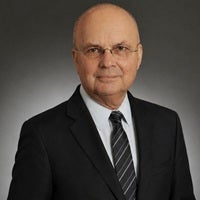
General Michael Hayden is a retired four-star general who served as director of the Central Intelligence Agency and the National Security Agency when the course of world events was changing at a rapid rate. As head of the country’s premier intelligence agencies, he was on the frontline of global change, the war on terrorism, and the growing cyber challenge.
He understands the dangers, risks, and potential rewards of the political, economic, and security situations facing us. He speaks on the delicate balance between liberty and security in intelligence work, as well as the potential benefits and dangers associated with the cyber domain. As the former head of two multi-billion dollar enterprises, he can also address the challenges of managing complex organizations in times of stress and risk, and the need to develop effective internal and external communications.
In addition to leading CIA and NSA, General Hayden was the country’s first principal deputy director of national intelligence and the highest-ranking military intelligence officer in the country. In all of these jobs, he worked to put a human face on American intelligence, explaining to the American people the role of espionage in protecting both American security and American liberty. Hayden also served as commander of the Air Intelligence Agency and Director of the Joint Command and Control Warfare Center and served in senior staff positions at the Pentagon, U.S. European Command, the National Security Council, and the U.S. Embassy in Bulgaria. He was also the deputy chief of staff for the United Nations Command and U.S. Forces Korea.
Hayden has been a frequent expert and commentator on major news outlets and in top publications, valued for his expertise on intelligence matters like cyber security, government surveillance, geopolitics, and more. He was featured in the HBO documentary Manhunt, which looked at espionage through the eyes of the insiders who led the secret war against Osama bin Laden, and in Showtime’s The Spymasters, a detailed look at the directors of the Central Intelligence Agency.
Hayden is a distinguished visiting professor at the George Mason University Schar School of Policy and Government and founder of the Michael V. Hayden Center for Intelligence, Policy, and International Security there. He also serves on a variety of boards and consultancies. In 2013, the Intelligence and National Security Alliance (INSA) awarded Hayden the 29th annual William Oliver Baker Award. General Hayden is also the first recipient of the Helms Award presented by the CIA Officers’ Memorial Foundation. In 2014 he was the inaugural Humanitas visiting professor in intelligence studies at Oxford University in the United Kingdom. His memoir, Playing to the Edge: American Intelligence in the Age of Terror, has been a New York Times bestseller and was selected as one of the 100 most notable books of 2016. His more recent work, 2018’s The Assault on Intelligence: American National Security in an Age of Lies, was also a New York Times bestseller and addresses the impact of a post-truth world on the intelligence enterprise.
About Mark S. Zaid
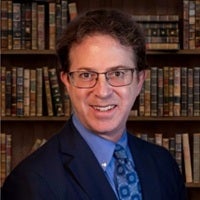
Mark S. Zaid is a Washington, D.C. based attorney who specializes in crisis management and innovatively handling simple and complex administrative and litigation matters primarily relating to national security, international law, foreign sovereign and diplomatic immunity, and the Freedom of Information/Privacy Acts.
Through his practice Mr. Zaid often represents former/current federal employees, particularly intelligence and military officers, defense contractors, Whistleblowers and others who have grievances, have been wronged or are being investigated by agencies of the United States Government or foreign governments, as well as representatives of the media. Mr. Zaid teaches the D.C. Bar Continuing Legal Education classes on “The Basics of Filing and Litigating Freedom of Information/Privacy Act Requests” (since 2003), “Defending Security Clearances” (since 2006) and “Handling Federal Whistleblower Cases” (since 2016).
Since 2009, he has been named a Washington, D.C. Super Lawyer every year (including being profiled) and he is repeatedly named a “Best Lawyer” in Washingtonian Magazine’s bi-annual designation for his national security or whistleblower work. The Magazine also named him one of D.C.’s 250 (2021) and 500 Most Influential People (2022 & 2023), respectively, for national security/legal intelligentsia. And in 2022, Mr. Zaid was also awarded the status of “Lawyer Lifetime Achievement Member” by the Magazine for being featured on its Top Lawyers list at least 10 times out of the past 15 years. In 2020, the Washington Metropolitan Employment Lawyer’s Association named him “Attorney of the Year” for his work on the Intelligence Community Whistleblower’s case. Forbes Magazine announced him as one of the top 200 lawyers in the United States in their inaugural ranking list in 2024. As the National Law Journal once wrote, “if Agent Mulder ever needed a lawyer, Zaid would be his man.”
Mr. Zaid is also the Executive Director and founder of the James Madison Project, a Washington, D.C.-based organization with the primary purpose of educating the public on issues relating to intelligence gathering and operations, secrecy policies, national security and government wrongdoing. Additionally, Mr. Zaid has previously served as an adjunct professor at Johns Hopkins University in the Global Security Studies program and at Texas A&M’s George H.W. Bush School of Government & Public Service where he taught on national security issues. He also currently serves on the Board of Directors at the Center for Ethics and the Rule of Law (University of Pennsylvania Law School), the Advisory Board of the International Spy Museum and as a Fellow with the National Institute of Military Justice. In 2017, Mr. Zaid co-founded Whistleblower Aid, a non-profit law firm that provides pro bono legal representation to whistleblowers, particularly in the national security arena, and serves as legal counsel.
In connection with his legal practice, Mr. Zaid has testified before, or provided testimony to, a variety of governmental bodies including the Senate Judiciary Committee, the Senate Governmental Affairs Committee, the House Judiciary Committee, the House Government Operations Committee, the Department of Energy, the Public Interest Declassification Board and the Assassination Records Review Board. From 2014-2016, he served as an appointed Member by the Archivist of the United States to the Freedom of Information Act Advisory Committee. “Curiously for this town,” once wrote the American Bar Association Journal, “Zaid is an equal opportunity thorn out to pierce the sides of suit jackets bearing both elephants and donkeys on the lapels.”
A 1992 graduate and Associate Editor of the Law Review of Albany Law School of Union University in New York, he completed his undergraduate education (cum laude) in 1989 at the University of Rochester, New York with honors in Political Science and high honors in History. Mr. Zaid is a member of the Bars of New York State, Connecticut, the District of Columbia, Maryland and numerous federal courts.
He can be reached at Mark@MarkZaid.com, and further information on his practice is available at www.MarkZaid.com. Mr. Zaid is also a part-time comic book dealer and regularly lectures on comic book history as well as represents many auction houses and collectibles’ dealers.
About Larry Pfeiffer
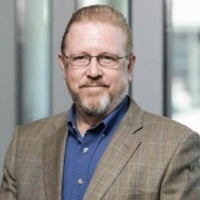
Larry Pfeiffer is the director of the Hayden Center, overseeing its development, operations, and activities. He is a highly respected and recognized expert in the areas of national and homeland security policy, crisis management, intelligence strategy, analysis and collection, overt and covert operations, and budgetary matters. A distinguished 32-year career in the US Intelligence Community included stints as senior director of the White House Situation Room and chief of staff to Director of the Central Intelligence Agency Michael V. Hayden.
While at the White House, Pfeiffer led the President’s round-the-clock operations and intelligence center, providing timely intelligence, information, and other support to the President, Vice-President, senior White House staff, and National Security Council members. While there he initiated the Situation Room’s monitoring of cyber-related activity and expanded the President’s national security secure communications and information technology infrastructure to better support senior leaders during times of greatest emergency.
As Hayden’s chief of staff at CIA, Pfeiffer served as his primary adviser, developing a deep understanding of all aspects of the organization. He later served Director Leon Panetta as chief for policy and coordination, building and leading a new organization able to anticipate and analyze policies impacting internal, national, and foreign intelligence relationships. Pfeiffer later advised Director John Brennan on privacy and civil liberties protection and oversight issues.
Earlier, Pfeiffer played a role in the reforms following 9/11 that redefined the leadership and management of the Community, having served first as the sole executive assistant from the Intelligence Community to Acting Director of Central Intelligence John McLaughlin and then as Hayden’s chief of staff when he was the first Principal Deputy Director of National Intelligence. At ODNI Pfeiffer was influential in setting initial organizational structure, policies, and procedures.
Pfeiffer began his career with the National Security Agency, rising from a signals intelligence analyst to chief of staff to the Foreign Affairs Director, overseeing all foreign relations activities at NSA.
Pfeiffer is a recipient of numerous awards, including the National Security Staff Medallion, recognition from the President, Vice-President, and National Security Advisor for his efforts supporting them, and two Central Intelligence Agency Director’s Awards.
Pfeiffer graduated from James Madison University with a Bachelor of Arts in Political Science and Russian Area Studies and earned a Master of Arts in National Security Studies from Georgetown University. He also benefited from senior leadership and executive training at Duke University’s Fuqua School of Business.
Pfeiffer is also a frequent commentator on television and radio news programs and has been quoted in major newspapers and newsmagazines on national security matters. He is a keynote speaker for Leading Authorities, Inc., and leads his own consulting firm, Five Four Consulting LLC, whose clients include NextFed and The Chertoff Group, where he had served as a managing director. Pfeiffer also has served on the boards of a government services firm and an information technology and cyber services company. Most recently he served as a technical adviser on Kathryn Bigelow”s latest film, A House of Dynamite.