In This Story
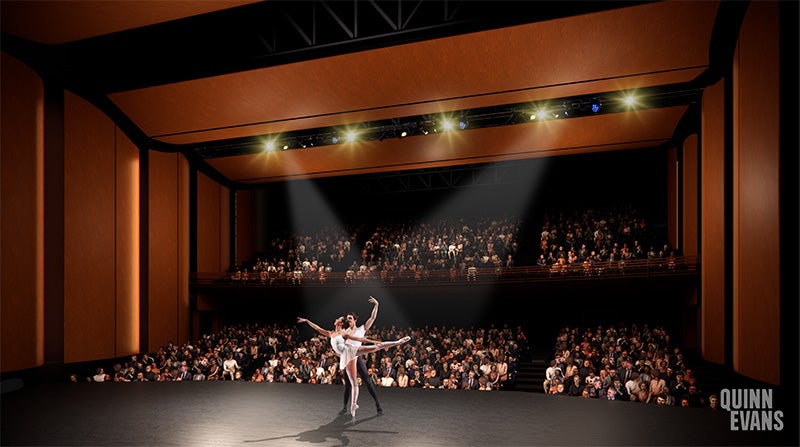
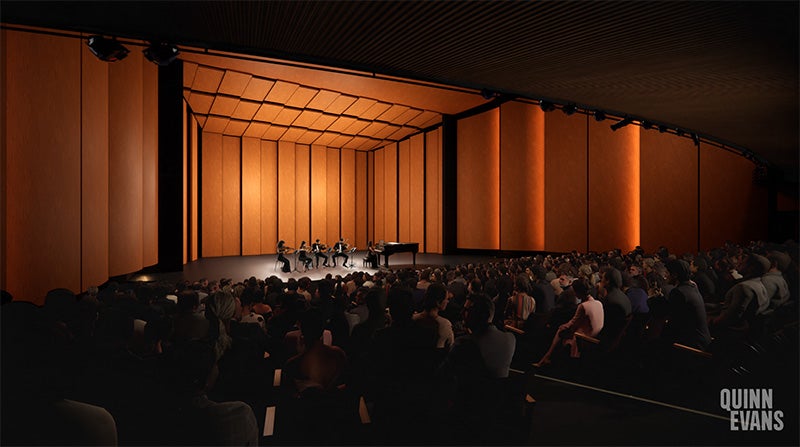
Earlier this spring, the Give Voice campaign reached another major milestone as the design team wrapped up its needs assessment in preparation for the Center for the Arts’s upcoming renovation. The fundraising initiative, which so far has raised $20 million of an initial $27 million, is part of the billion-dollar Mason Now: Power the Possible campaign to support student success, research, and innovation at George Mason. It will enable the university to make much-needed updates to modernize and improve the Center for the Arts with upgrades that include enhanced café and bar service, new lounges for Friends and donors, and additional studio, classroom, and community spaces.
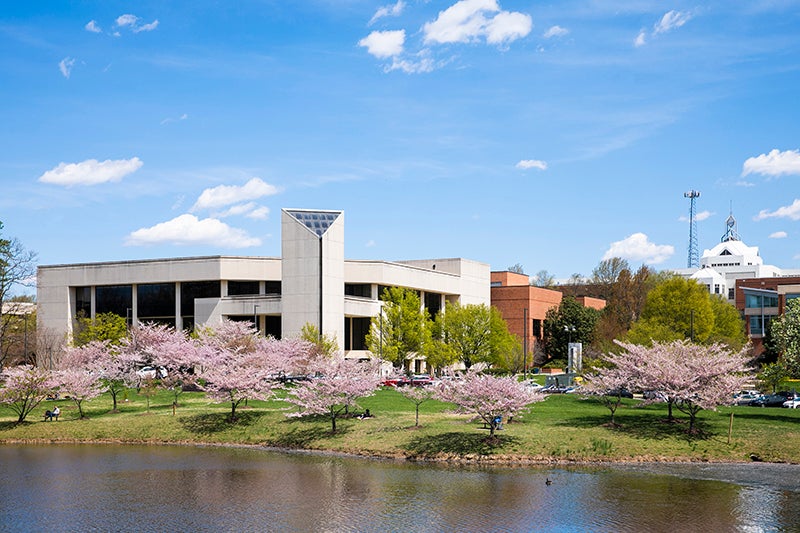
To develop a comprehensive understanding of the Center for the Arts’s current condition and performance, and to explore opportunities to transform the facility—which opened in 1990—university representatives and architects from Quinn Evans led a series of focus groups attended by stakeholders from across the university. Students, faculty, donors, Center for the Arts staff, and technical experts all brainstormed and provided feedback that the design team incorporated into the planning study, new renderings, and cost estimates.
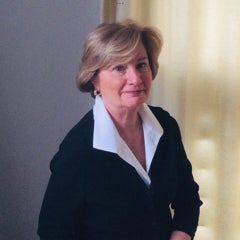
Associate Dean Emerita Victoria Salmon, former chair of the Mason Arts Board, was one of those many stakeholders. She is particularly well-suited to sharing her thoughts about the Center for the Arts, given the variety of roles she has held at the College of Visual and Performing Arts, dating to 1994, when she first arrived on campus as a graduate student. She found an intellectual home at George Mason and, in the years that followed, served as a professor and administrator, and she has continued to engage students as an Arts Management adjunct professor since her retirement in 2014, as well as contributing philanthropically to the university.
Wearing “lots of hats,” she said in a recent interview, was useful: “I could see what a donor would want to see. . . . I could see it through the Board’s [perspective].” And her position as a faculty member also added another important point of view.
The complexities involved in a re-envisioning and updating a large and beloved community space like the Center for the Arts are myriad, and the focus groups’ input was important, Salmon observed, because of the center’s use by groups all across the university and the many needs that the center serves, both at George Mason and beyond: “I call it the gate to the community,” she said.
Despite all the factors that needed to be taken into consideration, she said, facilitators kept the groups organized and on task as they helped participants to generate ideas and prioritize.
When asked to name which upgrade she was most looking forward to, Salmon answered promptly: new aisles. A family member has mobility issues, she explained, so she understands the importance of accessibility. The prospect of improved acoustics also excites her, and she believes the center’s new design will “bring the audience closer to the work.” She also can’t wait to see how the new gallery space will showcase artists working in different mediums. “It’s really important to see the visual arts there,” she said.
Salmon’s “great affection” for the Center for the Arts has its roots in her fondness for College of Visual and Performing Arts students and faculty and the performances which have made the performing arts center central to her family’s “cultural life.” But Salmon emphasizes that the center’s importance extends beyond the arts to George Mason as a whole—an expansive idea she sees reflected in the name of the center’s fundraising campaign. “When you say Give Voice,” she said. “It’s not just giving voice to the students and faculty. It’s giving voice to the university.”
Want to learn more? More information can be found on the Center for the Arts Give Voice page, along with updates and details on how you can contribute.